.webp)

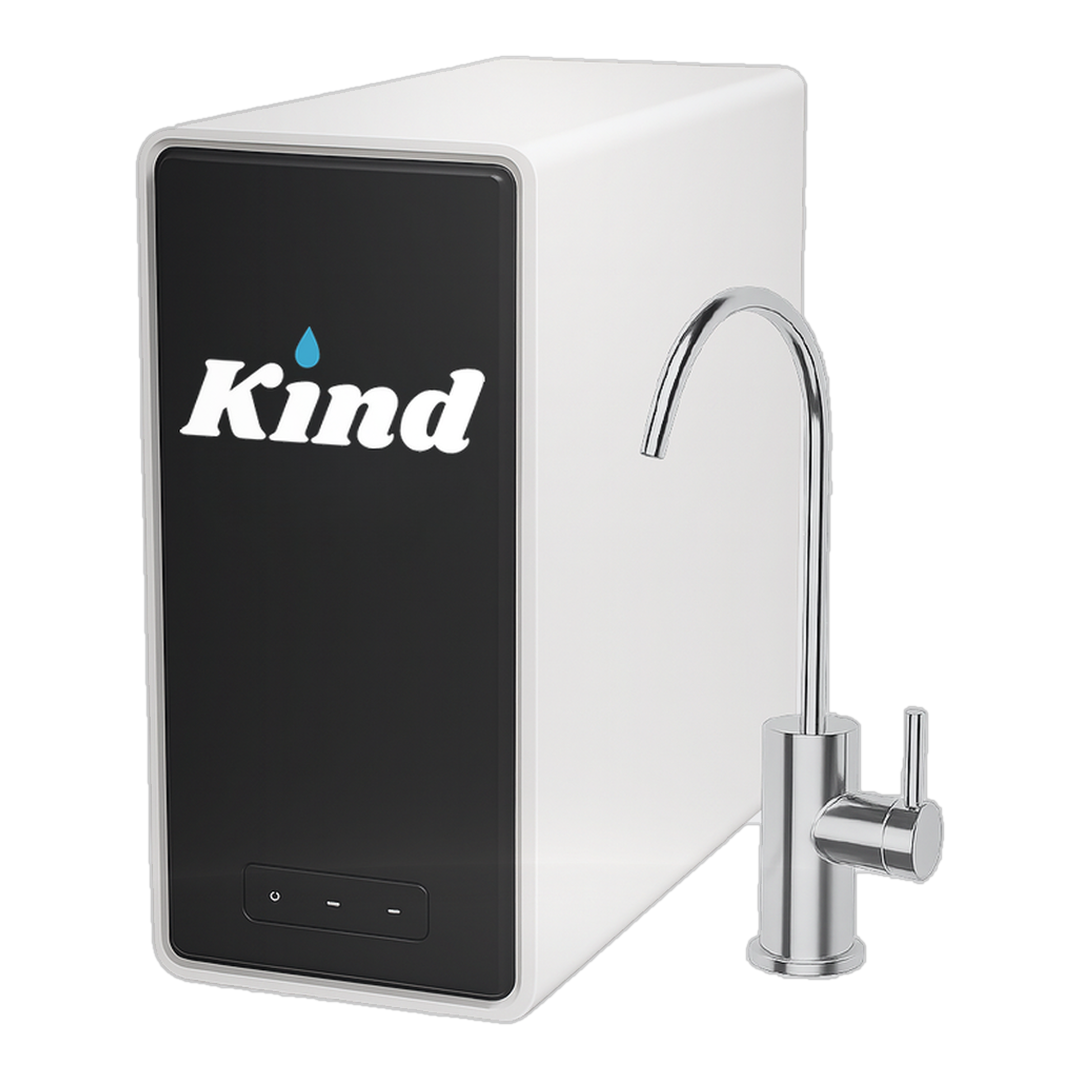
Tankless Reverse Osmosis System
Seven stages on demand with alkaline built in, and no storage tank taking up the cabinet under your sink.



The short answer
- Installed price: The tankless reverse osmosis system is $997 installed at the kitchen sink, all-in: the seven-stage unit, its dedicated faucet, installation by a licensed local plumbing professional, taxes and a lifetime parts warranty.
- No storage tank: The unit stores no water; it makes water while the faucet is open and stops when you close it, which is what gives the cabinet under the sink back.
- Certification: The tankless unit is certified to NSF/ANSI 58, and the certified claim is TDS reduction, with no separate removal percentage published for it.
- Power requirement: It needs a powered outlet under the sink, and where the only outlet is wired to the garbage-disposal switch, a garbage-disposal air switch is $200 installed.
- Wells excluded: The extra dissolved solids in well water cost this unit pressure, so on a private well the $897 tank system goes in instead, and only that.
- Annual service: The optional yearly visit is $249 for a tankless home against $199 for a tank home, and the difference is the price of the seven-stage filter set.
The tankless reverse osmosis system is $997 installed at your kitchen sink, all-in: the seven-stage unit, its dedicated faucet, installation by a licensed local plumbing professional, taxes and a lifetime parts warranty. It is built for city-water homes that want drinking water made on demand and want the cabinet under the sink back. It is one of two reverse osmosis systems we install, and it is the one that needs a powered outlet under the sink, which is the first thing we check.
The cabinet space it gives back
After a tankless install, what sits in the cabinet under the sink is the filter unit itself, mounted on the cabinet wall, the small lines to the cold supply and the drain, and a power cord. There is no storage tank because the unit does not store water; it makes water while the faucet is open and stops when you close it. For a lot of Eastern Iowa kitchens that is the whole reason to pay $100 more than the tank system: the cabinet under the sink is where the trash pulls out, where the cleaning supplies live and where the disposal already takes up room, and this unit leaves most of that floor alone.
The other reason is households that draw a lot of drinking water at once. This unit keeps making water for as long as the faucet is open. Fill two stockpots and a pitcher before dinner and it is still making water when the third container goes under the faucet, with no pause built into it. If you are cooking for six, refilling water bottles for a whole team and keeping a coffee maker busy, that is where this unit earns its place. A smaller household that fills a glass at a time gets the same water from either unit, and for them the cabinet is the deciding question, not the volume.
Seven stages, with the alkaline stage built in
The unit runs water through seven stages, and the alkaline stage is built in, adding minerals back so the water does not taste flat. What each stage does, and how a membrane separates dissolved solids from water, is on our reverse osmosis page, and we will not repeat it here.
The tankless unit is certified to NSF/ANSI 58, and the certified claim is TDS reduction. We do not publish a separate removal percentage for it. That is also as far as we go on health: we tell you what the certificate says and what your before-and-after TDS readings show, and we stop there.
The outlet under the sink, and the $200 fix
This is the first thing we check on a tankless install, so we ask about it before anything else. The unit needs a powered outlet under the sink. In a lot of Eastern Iowa kitchens the outlet in that cabinet is wired to the wall switch that runs the garbage disposal. Plug a reverse osmosis unit into a switched outlet and it only makes water when someone flips the disposal on, which is not a system anyone wants. The check itself takes a minute: we flip the disposal switch and see whether the outlet goes with it, and we look for a second outlet in the cabinet that stays live on its own.
The fix is a garbage-disposal air switch, $200 installed. It moves the disposal to a push button on the countertop, which frees the switched outlet to power the reverse osmosis unit full time. The $200 is a published price, and we will tell you at the free water test whether your cabinet needs it. If there is no outlet under your sink and no switched one to free, the $897 tank system is the one we install instead, and we will say so rather than sell you an electrical project.
Four cabinets, and what we install in each
- The outlet under the sink is wired to the disposal switch. The $200 garbage-disposal air switch moves the disposal to a countertop button and frees that outlet, and the tankless unit goes in.
- No outlet under the sink and no switched one to free. We install the tank system instead, and we say so at the water test rather than on install day, so the price you plan around is the right one.
- A private well. The extra dissolved solids in well water cost this unit pressure, so on a well we install the tank system, and only that.
- Floor space to spare in the cabinet and no outlet. The tank system is the cheaper answer at $897, and a cabinet with room to spare can give up the space its storage tank takes.
The $997, the $200 outlet fix, and what is not on the bill
| Line item | In the $997, or extra |
|---|---|
| Seven-stage tankless reverse osmosis unit, alkaline stage built in | Included |
| Dedicated kitchen faucet | Included |
| Installation by a licensed local plumbing professional | Included |
| Taxes | Included; the quoted number is the number you pay |
| Warranty: lifetime parts, five years on media, one year on labor | Included |
| Diagnostic trip fee in the first year | Waived on units we install |
| Garbage-disposal air switch, only when the sole outlet is switch-controlled | $200 extra |
| Annual service visit, optional | $249 per year |
Military members and first responders take $100 off, and 0% financing is available on approved credit through a third-party lender. How the $997 sits against the installed figures national cost sites publish is on our reverse osmosis cost page.
The $249 yearly visit, and why it is not $199
Ownership after install day is one visit a year. For a tankless home it is $249, and it includes every reverse osmosis filter the unit takes, a water test at the faucet and a full check of the system. A tank home pays $199 for the same visit. The difference is the filters: a replacement set for the seven-stage tankless unit costs roughly 3.6 times what a tank set costs, and the visit price follows that. The $50 is the filter set and nothing else; the water test and the system check are the same either way. Both units run seven stages; the tankless replacement set simply costs more, and that is the whole story behind the two numbers.
The visit is optional. What service and repair cost after the first year is on our reverse osmosis service page.
The same unit inside the $2,850 whole-home build
The softener-plus-reverse-osmosis package is $2,850, and the drinking-water side of that build is this exact unit, seven stages and alkaline stage included. The same package without reverse osmosis is $2,500. The full build, the media in each tank and the XL sizing are on our whole-home softener and reverse osmosis page.
An on-demand unit fed softened water is the pairing inside that package, and it is the way most of these units leave our schedule. This unit serves one faucet; hardness through the house is a softener question, and the free test gives you that number in grains per gallon. USGS counts water above 180 mg/L as very hard.
Have us check the outlet and the cabinet first
Start with the free in-home water test. We will look under the sink while we are there and tell you whether the outlet is switched and whether the cabinet suits a tankless unit. Your city utility’s annual Consumer Confidence Report lists what was detected in your supply over the year, and our test fills in hardness, iron, TDS and a nitrate screening reading at your own tap.
The installed price includes taxes, and we test your tap before and after installation. Our water guarantee has the terms. For main Des Moines service, call or text (515) 709-4674 or start your Des Moines quote. For Marion / Eastern Iowa, call or text (319) 319-6566 or use the Eastern Iowa quote. Email hello@kindwaterco.com. Your team confirms coverage, scheduling and any travel charge before booking.
- ✓Equipment included
- ✓Professional installation
- ✓Lifetime parts warranty
- ✓Taxes included
0% financing available. The in-home water test is free, with no obligation.
Straight answers.
Does a tankless reverse osmosis system need electricity?
Yes. The tankless unit makes water on demand rather than storing it, and it needs a powered outlet under the kitchen sink to do that. In many Eastern Iowa kitchens the outlet in that cabinet is wired to the garbage disposal switch, so a $200 garbage-disposal air switch moves the disposal to a countertop button and frees the outlet. Where there is no outlet under the sink and no switched one to free, the $897 tank system is the one we install instead.
Can I run a refrigerator or ice-maker line from a tankless reverse osmosis system?
Bring the refrigerator model and photos showing the sink-to-fridge route. We review the selected RO model’s connection requirements, available access and refrigerator compatibility before quoting the work. If a stored supply better suits the refrigerator, compare the tank RO option. The layout assessment determines the proposed connection and its installed price.
Do I need an electrician before a tankless RO can go in?
No. We do not send you off on an electrical project before the install. If the outlet under the sink is wired to the garbage-disposal switch, the $200 garbage-disposal air switch moves the disposal to a countertop button and frees that outlet for the unit, and $200 is the published price for it. If there is no outlet under the sink and no switched one to free, we install the $897 tank system instead and tell you that up front at the water test.
Does the tankless reverse osmosis system put minerals back in the water?
Yes. The unit runs seven stages with an alkaline stage built in, and that stage adds minerals back so the water does not taste flat. It is included in the $997 price, with nothing to add on. This is a taste adjustment; the membrane is still doing the work of reducing total dissolved solids, and the mineral stage does not change what the NSF/ANSI 58 certificate covers, which is TDS reduction.
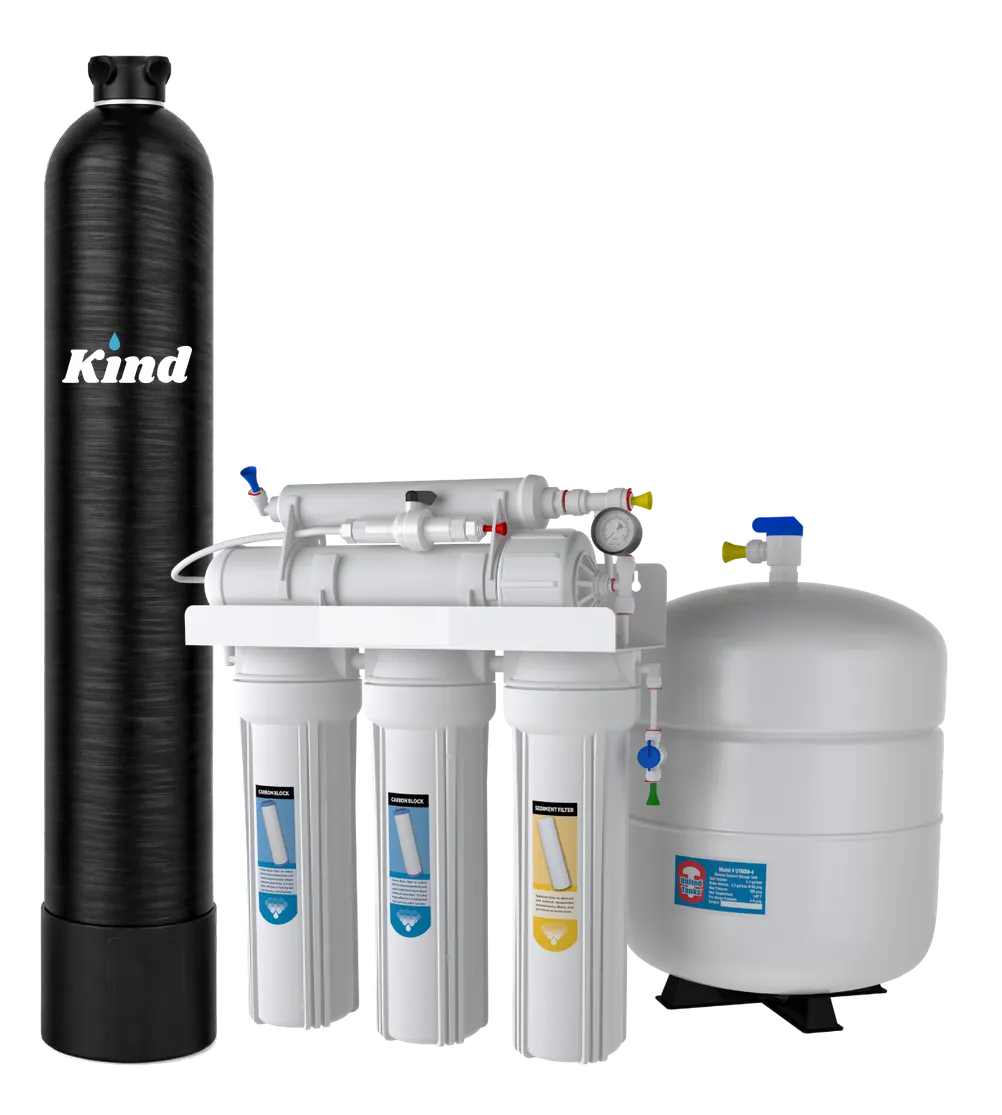
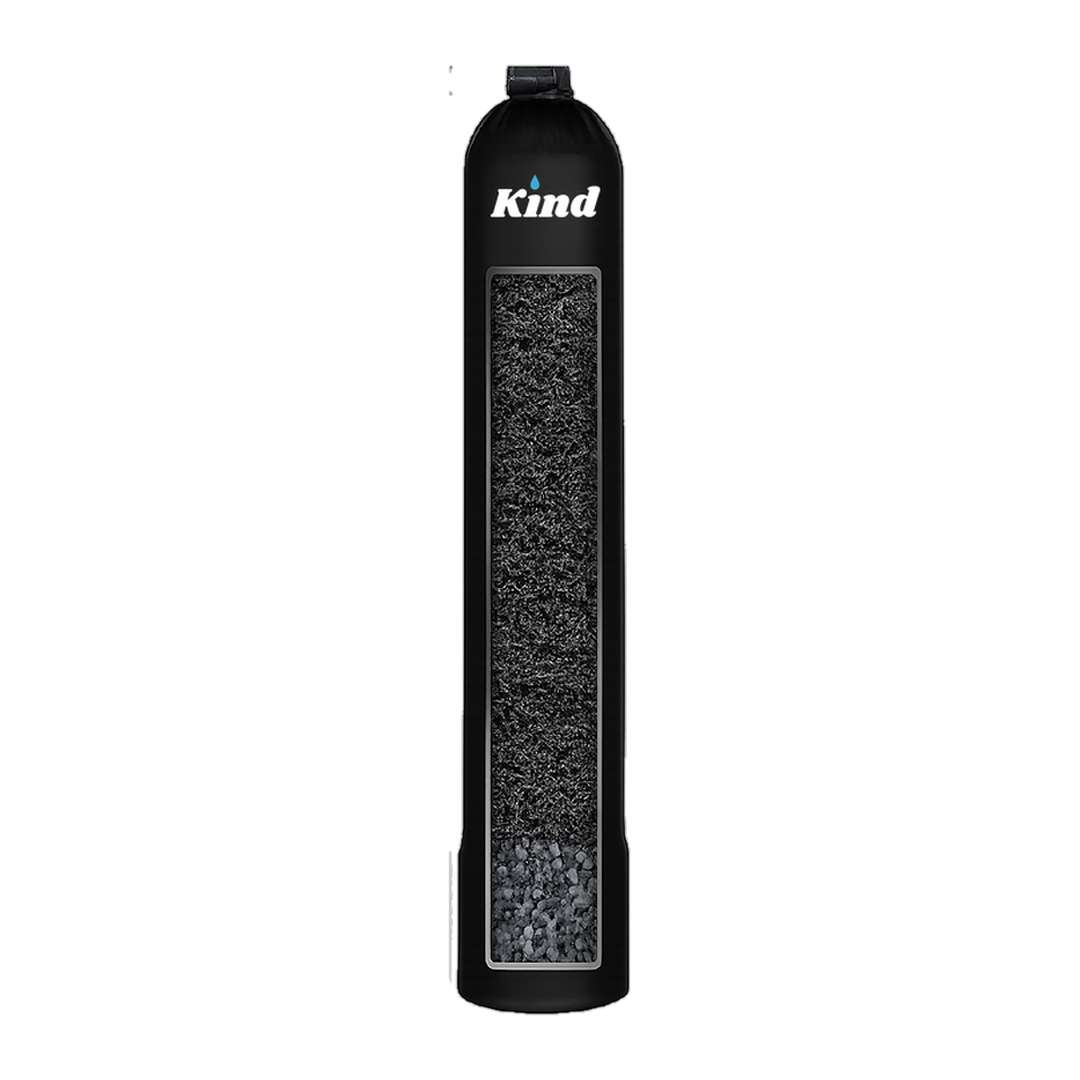
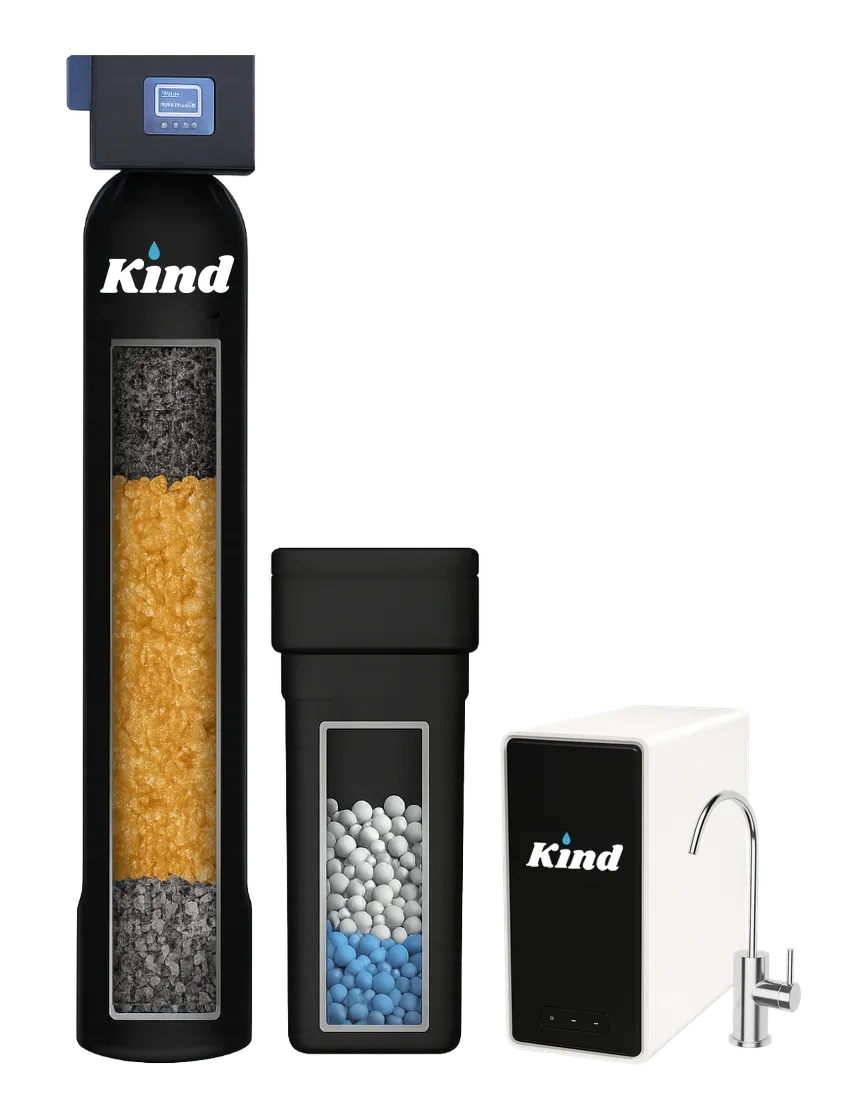
Other systems we install.
Same warranty, same install standard — a different build for a different home.
Not sure which system you need?
Start with a free in-home water test. We'll test your water and recommend exactly the right fit — no pressure, no obligation.
Book my free water test